What astrology really reveals about you – and why your birth chart is so amazingly accurate
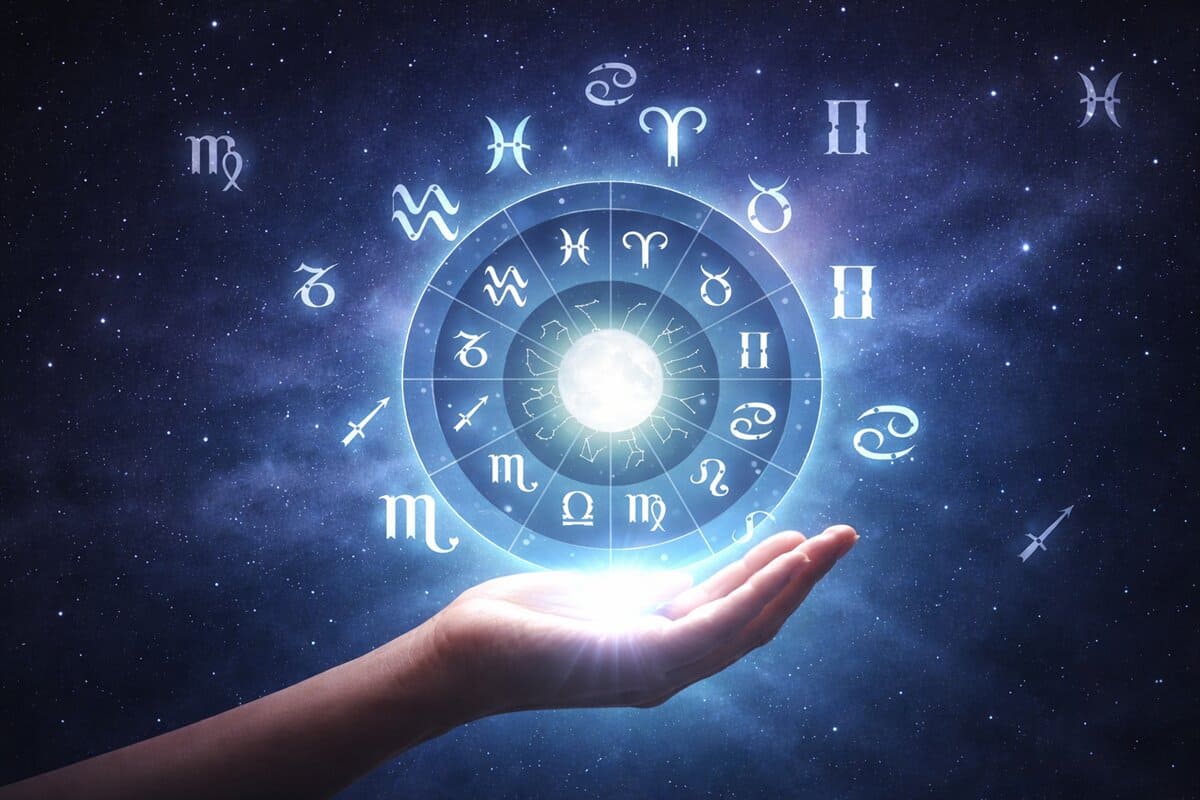
Astrology is far more than newspaper horoscopes and vague predictions. Your birth chart – the exact planet constellation at the moment of your birth – forms a kind of cosmic fingerprint that describes your personality, strengths and life themes with amazing accuracy.
What is astrology really? More than horoscopes in the newspaper
When most people think of astrology, they think of newspaper horoscopes. On vague predictions such as "Today is a good day for new contacts" or "Beware of financial decisions." And then they wonder why the whole thing doesn't seem particularly accurate. But newspaper horoscopes have about as much to do with astrology as fast food with haute cuisine: the ingredients may be similar, but the quality is completely different.
Real astrology is a precise, mathematically founded system that calculates the exact state of all planets at the time and place of your birth and transfers this constellation into an individual birth chart – also called radix or Natal Chart. This chart is as unique as a fingerprint. Even twins who are born only minutes apart can have different ascendants, which changes their birth chart noticeably.
What makes astrology so fascinating is the fact that it is not simply someone's invention. It is the result of more than 4,000 years of systematic observation: Babylonian astronomers, Egyptian priests, Greek philosophers such as Ptolemy, Arab scholars and European Renaissance astrologers – they all contributed to the same system and refined it. Astrology, as we know it today, is a collective human work.
The birth chart: your cosmic fingerprint
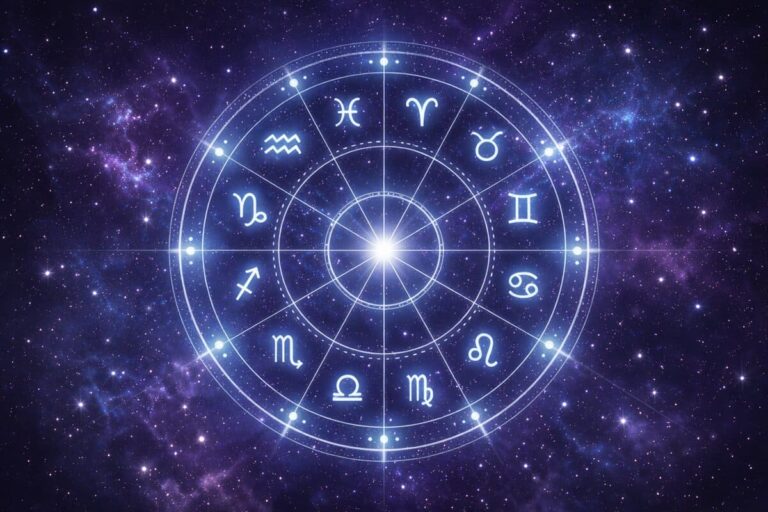
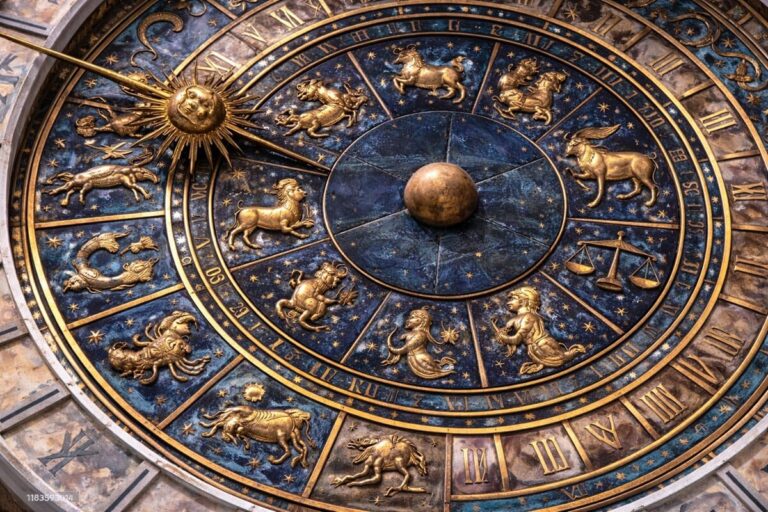
The heart of astrology is the birth chart. It shows the exact position of all planets in the twelve zodiac signs and the twelve houses at the time of your birth. Sounds abstract?
The twelve zodiac signs describe how – the quality of an energy. Aries energy is direct and impulsive, Libra energy is diplomatic and balancing, Scorpio energy is profound and transformative. Planets describe what – which area of life is affected. The Sun stands for your being, the Moon for your emotions, Venus for your love, Mars for your drive, Mercury for your thinking.
And the twelve houses describe where – in which area of life an energy manifests. The first house concerns the self-image, the seventh house the partnerships, the tenth house the career. If someone has Venus (love) in Capricorn (disciplined, loyal) in the seventh house (partnership), this describes a person who places reliability above passion in relationships and considers partnerships as a long-term project.
The combination of these three levels – planet, sign, house – creates millions of possible constellations. Each tells a different story. And that's precisely why a professionally interpreted birth chart is so amazingly precise: it does not look at a zodiac sign, but at the entire cosmic signature of your birth.
The seven classical planets and their meaning
Traditional astrology – from Ptolemy to William Lilly – focuses on seven celestial bodies. Each represents a fundamental aspect of human experience.
Sun: Identity and willpower
The sun is the center of your horoscope, as it is the center of our solar system. It describes your conscious will, your ego, what you want to be and what you plan your life on. Your sun sign – what most know as their zodiac sign – is the most visible part of your personality.
Moon: emotions and subconscious
The moon moves the fastest through the zodiac and The symbol changes every two and a half daysIt describes your emotional inner life: how you feel, what you need to feel safe, how you react to stress. The moon is the hidden part of your personality – the part you only show to the people you really trust.
Mercury: communication and thinking
Mercury determines how you think and communicate. A Mercury in Gemini thinks quickly, versatile and erratic. A Mercury in Taurus thinks thoroughly, methodically, and takes time. Mercury's position explains why some people excel in discussions, while others only formulate their best ideas when writing.
Venus: love and values
Venus describes not only how you love, but also what is valuable to you. It shows your aesthetic sensibilities, your relationship to money and possessions and the type of relationship that fulfills you. Venus in Leo loves generous and dramatic. Venus in Virgo shows love through caring and practical help. Venus in Aquarius needs freedom in love and falls in love with originality.
Mars: drive and assertion
Mars shows how you act, fight and pursue your goals. It describes your energy, your ambition and yes, even your aggressiveness. Mars in Aries is explosive and direct. Mars in Scorpio is strategic and persistent. Mars in Libra avoids conflict and asserts himself through diplomacy.
Jupiter: growth and happiness
Jupiter is the largest planet in our solar system and in astrology represents expansion, optimism and possibilities. Where Jupiter is in your horoscope, you will find your greatest growth potential and the areas where things often come easier to you than others.
Saturn: structure and maturation
Saturn is the teacher of the zodiac. It shows you where you have to work, discipline and mature. Saturn themes often feel heavy, but they bring the deepest and most lasting results. The famous Saturn return – when Saturn returns to its birth position for the first time at around 29 years of age – marks for many people the actual entry into adult life.
Aspects: The conversations between the planets
One of the most powerful factors in the birth chart are the aspects – the angular relationships between the planets. They show which parts of your personality work together harmoniously and which are in tension with each other.
A conjunction (0 degrees) merges two planetary energies into one unit. A trine (120 degrees) creates effortless flow between two forces. A square (90 degrees) generates tension and friction, but also drive and dynamics. An opposition (180 degrees) confronts two forces and demands balance.
A person with a moon-square-saturn experiences emotional restraint and the feeling of having to suppress his needs. A person with Venus Trigon Jupiter, on the other hand, has a natural talent for generosity, optimism in love and the ability to see the good in the partner. The aspects transform a static planetary setup into a dynamic portrait – they not only show what you have, but how the different parts of your personality interact with each other.
The twelve houses: the stages of your life
While the signs and planets describe who you are, the houses describe where these energies unfold in your life.The twelve houses cover all areas of life, from identity to relationships to spirituality.
The first house determines your appearance and your first impression. The second house concerns money, possession and self-worth. The third house stands for communication and short trips. The fourth house for family and home. So it goes on to the twelfth house, which stands for the unconscious, dreams and hidden fears.
The four cornerstones of the horoscope are particularly revealing: the Ascendant (top of the first house), the MC or Medium Coeli (top of the tenth house), the Descendant (top of the seventh house) and the IC or Imum Coeli (top of the fourth house).These four points form the axis cross of your horoscope and mark the central life themes: identity, career, partnership and origin.
Transits: Why times change
The birth chart is a snapshot, but the planets continue to move. Transits describe the current position of the planets in relation to your birth chart. They explain why certain phases in life are lighter or heavier, why some years are marked by growth and others by crises.
When Jupiter runs through your birth venus, you often experience a phase of ease in goals and financial things. When Saturn runs over your birth moon, a phase of emotional disenchantment and maturation can occur. And when Pluto – the planet of profound transformation – touches an important point in your horoscope, changes are imminent that can fundamentally transform your life.
Transits are the reason why experienced astrologers can not only describe your personality, but also current life themes and upcoming phases. Not as rigid predictions, but as cosmic weather reports: They don't tell you what will happen, but under what conditions you navigate.
Why a professional birth horoscope reveals so much
At this point it becomes clear why a professionally created and interpreted birth chart reveals so much more than a newspaper horoscope. It considers not only the sun, but ten planets. Not only one sign, but twelve. Not only one dimension, but three levels (planet, sign, house) plus their interactions (aspects) plus the temporal development (transite).
The result is a portrait of a difference that no personality test can achieve. It describes not only strengths and weaknesses, but also inner contradictions, unconscious patterns, targeting dynamics, professional talents and the cycles of your personal development.
It's never about determinism. Astrology shows potentials and tendencies, not obsessiveness. You always have the choice of how to deal with your basic cosmic equipment. But in order to make a conscious choice, you first need to know what is there. And that's exactly what a birth chart does: it makes the invisible visible.
Astrology and Psychology: Why the connection is not a coincidence
The connection between astrology and psychology is deeper than many suspect. Carl Gustav Jung, one of the founders of analytical psychology, used birth charts in his therapeutic work. He saw in the astrological symbols no superstition, but a language of the collective unconscious – archetypes that translate universal human experiences into images and stories.
Mars as warrior, Venus as lover, Saturn as wise age, Jupiter as king – these archetypes appear in myths, fairy tales and dreams of all cultures. Astrology orders them into a coherent system that allows to describe individual personality structures.
Modern astrologers often work with psychological backgrounds. They do not interpret a birth chart as a cover-up of fate, but as a map of the psyche: Where are your resources? Where are your blind spots? What internal conflicts drive you? What unconscious patterns sabotage you? A well-interpreted birth chart answers these questions with a depth and accuracy that amazes many people.
Conclusion: Your birth chart knows you better than you think
Astrology is neither superstition nor accurate science. It is a symbolic system of extraordinary depth and complexity that has been developed over millennia by the smartest minds of different cultures. Your birth chart contains information about your personality, your target patterns, your professional talents and your life cycles that will surprise you.
You don't have to understand everything to see the value. Sometimes, a single sentence from an astrological analysis is enough to put something into words that you've felt for a long time but could never name. And at this very moment astrology reveals its true strength: it gives you a language for those parts of you that otherwise remain hidden.